When modern property managers, industrial hygienists, and co-op boards update their environmental health checklists, modern threats often take precedence. It is easy to see why emerging contaminants like PFAS (“forever chemicals”), microplastics, and immediate biological hazards like Legionella dominate risk management discussions. They are frequently in the news and represent rapidly evolving regulatory landscapes.
However, focusing exclusively on new environmental trends can create a dangerous blind spot for legacy hazards. Among these older, foundational threats, arsenic remains one of the most potent, persistent, and overlooked contaminants in urban and commercial water infrastructure. Despite decades of public health warnings, arsenic still absolutely deserves a permanent place in professional water testing panels.
The Geogenic and Industrial Legacy of Arsenic
Arsenic is a naturally occurring metalloid found within the Earth’s crust. Because it is an element, it does not break down, degrade, or disappear over time. It enters groundwater supplies primarily through geogenic processes—meaning the natural weathering, erosion, and dissolution of arsenic-bearing minerals and rock formations.
While municipal water treatment plants in major urban centers filter out a significant portion of raw environmental arsenic, deep bedrock aquifers and localized geographic pockets can still exhibit elevated levels. Furthermore, urban soil and groundwater profiles carry the scars of historical industrial activity. For generations, arsenic was heavily utilized in:
- Commercial pesticides, herbicides, and agricultural wood preservatives (such as Chromated Copper Arsenate, or CCA).
- Glass manufacturing, electronics production, and non-ferrous metal alloying.
- Legacy manufacturing plants and chemical storage yards that once dotted industrial corridors.
Over decades, these historical surface deposits can leach deep into the water table, creating localized plumes of contamination that bypass or challenge aging municipal distribution infrastructure. Property leaders looking to understand how regional industrial histories impact modern property portfolios can explore tailored diagnostic strategies by looking into protocols designed for Midtown buildings to see how dense urban footprints account for these underlying soil and water risks.
The Chronic Health Threat: A Silent Carcinogen
Unlike biological pathogens that cause acute, immediate illnesses like gastrointestinal distress or pneumonia, arsenic is a patient toxin. It is colorless, tasteless, and odorless, meaning occupants can drink contaminated water for years without noticing a single aesthetic red flag.
The World Health Organization (WHO) and the Environmental Protection Agency (EPA) classify arsenic as a Group 1 human carcinogen. Long-term exposure to even low concentrations in drinking water is conclusively linked to a devastating array of chronic health conditions:
- Oncology: Increased rates of bladder, lung, kidney, liver, and skin cancers.
- Cardiovascular Disease: Advanced hypertension, ischemic heart disease, and peripheral vascular injury (historically known as Blackfoot disease).
- Neurological Impacts: Peripheral neuropathy, cognitive decline, and developmental delays in children.
- Endocrine Disruption: Direct interference with hormone signaling pathways, heavily correlating with the development of Type 2 diabetes.
Because the human body bioaccumulates heavy metals and metalloids over time, there is no truly “safe” level of exposure. The federal Maximum Contaminant Level (MCL) is currently set at $10\text{ ppb}$ (parts per billion), but public health advocates continuously push for even lower thresholds as modern epidemiological data reveals risks at lower concentrations.
Why Advanced Facility Managers Cannot Rely on Basic Screenings
A major pitfall in commercial real estate asset management is relying on basic, over-the-counter water testing kits or standard chemical screens. Most retail DIY test strips are chemically incapable of detecting arsenic, or they only register its presence at incredibly high, acutely toxic parts-per-million ($\text{ppm}$) levels.
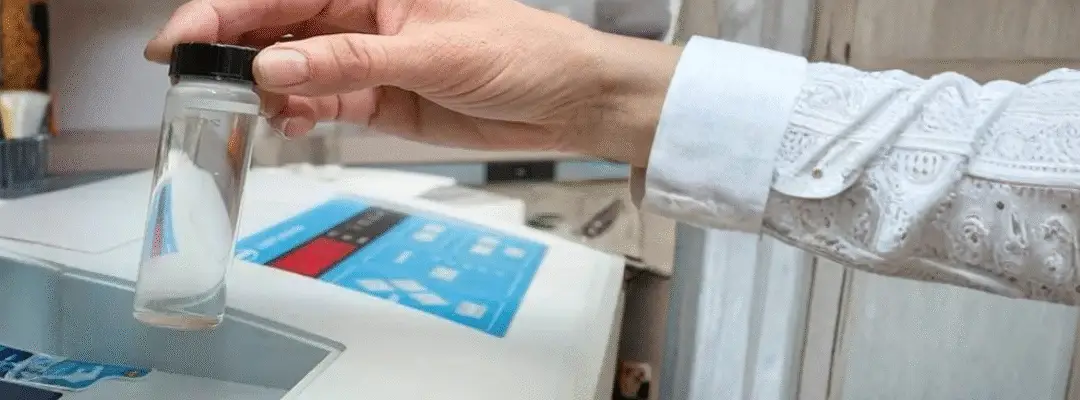
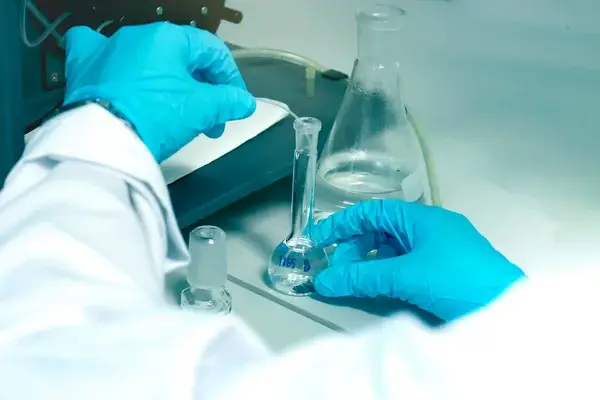
Detecting arsenic at the strict regulatory parts-per-billion threshold requires advanced analytical chemistry. Professional environmental laboratories utilize highly sophisticated instrumentation, such as Inductively Coupled Plasma Mass Spectrometry (ICP-MS). This technology atomizes the water sample in a high-temperature plasma torch, allowing scientists to detect and quantify elemental arsenic at microscopic, molecular levels.
Furthermore, arsenic exists in water in multiple chemical forms, primarily trivalent arsenite ($\text{As(III)}$) and pentavalent arsenate ($\text{As(V)}$). Arsenite is significantly more toxic and harder to remove through standard filtration than arsenate. A professional laboratory analysis doesn’t just look for total arsenic; it provides the precise chemical breakdown necessary to design effective, targeted filtration and remediation systems. To see how these high-level laboratory diagnostics are scaled across large commercial architectures, facility teams can explore structured commercial testing services.
Secondary Interactions: How Plumbing Dynamics Alter Risk
Another reason arsenic testing must remain standard practice is the way it interacts with other chemical components inside a building’s internal plumbing network. Water quality is highly dynamic, and a change in one parameter can inadvertently unlock or amplify another hazard.
For example, when building engineers adjust water treatment parameters to combat separate issues—such as modifying chlorination levels to suppress biological pathogens or changing orthophosphate feeds to prevent lead corrosion—the underlying water chemistry changes. Shifts in the water’s Oxidation-Reduction Potential (ORP) or pH can destabilize existing mineral scales inside older pipes or storage tanks. If legacy arsenic has bound itself to iron or manganese sediments inside the building’s water risers over decades, a sudden change in water chemistry can cause those sediments to slough off, releasing a concentrated spike of arsenic directly into tenant taps.
Understanding these complex, cascading chemical reactions is a fundamental pillar of modern property risk management. Operations teams can review an in-depth breakdown of these shifting chemical behaviors by examining common water quality risks to better inform their preventative engineering routines.
Conclusion: Total Environmental Accountability
In the modern real estate and corporate landscape, institutional tenants and residents demand absolute transparency regarding indoor environmental quality. A building that fails to monitor for a known, severe carcinogen like arsenic is exposing itself to massive legal liability, diminished asset valuation, and profound public health risks.
True safety is built on comprehensive, scientific data. While it is vital to defend against emerging, modern chemical threats, we cannot afford to drop our guard against the foundational legacy hazards that have threatened human health for generations. Arsenic was a critical water quality threat fifty years ago, and without rigorous, professional laboratory testing, it remains an invisible threat today.