In the competitive landscape of Midtown real estate, property managers, co-op boards, and corporate facility engineers have long relied on standard water testing protocols. For decades, verifying the safety of a building’s drinking water meant running a baseline panel: checking for lead and copper leaching from old pipes, testing for coliform bacteria, and measuring basic metrics like pH and turbidity.
However, environmental science and public health regulations have fundamentally shifted. Today, a truly comprehensive water management strategy cannot stop at traditional contaminants. Per- and polyfluoroalkyl substances—commonly known as PFAS or “forever chemicals”—have emerged as a critical regulatory and public health focal point. For premier properties across the neighborhood, dedicated PFAS analysis has transitioned from an optional, niche evaluation into a mandatory component of a complete urban water program.
Understanding the Threat of “Forever Chemicals”
PFAS comprise a family of thousands of synthetic, carbon-fluorine-based chemicals developed in the mid-20th century. Because the carbon-fluorine chemical bond is one of the strongest in organic chemistry, these compounds possess extraordinary resistance to heat, water, oil, and physical degradation. This durability made them highly effective for manufacturing consumer and industrial products, including:
- Non-stick cookware and food packaging.
- Water-resistant clothing and upholstery.
- Industrial lubricants, electronics manufacturing agents, and specialized firefighting foams.
The very characteristic that makes PFAS industrially useful—their near-indestructibility—makes them an environmental nightmare. When these chemicals leach into the soil, rivers, and groundwater aquifers from historical manufacturing, landfill runoff, or urban industrial activity, they do not break down. They bioaccumulate, meaning they build up in the environment and inside the human body over time through chronic, low-level exposure from sources like drinking water.
The Shifting Regulatory Landscape
For years, chemical compounds like PFOA and PFOS existed in a regulatory grey area, monitored by health advisories but not subject to strict federal limits. That paradigm has changed completely. The Environmental Protection Agency (EPA) has enacted legally enforceable Maximum Contaminant Levels (MCLs) for several prominent PFAS compounds in public drinking water systems.
These new federal standards are exceptionally stringent, establishing limits at single-digit parts-per-trillion ($\text{ppt}$) thresholds. To put this in perspective, measuring parts-per-trillion is the scientific equivalent of detecting a single drop of water inside an Olympic-sized swimming pool.
Because municipal water suppliers are now racing to upgrade their centralized filtration infrastructure to meet these historic benchmarks, building ownership teams must take a proactive stance. Relying blindly on generalized city compliance data is an operational risk. Securing building-specific data through localized evaluation is the only way to verify true tap safety. Property managers looking to align their environmental risk strategies with these shifting regulatory realities can gain deeper insight by reviewing protocols tailored for Midtown buildings to see how dense urban layouts dictate structural sampling.
Why Specialized Laboratory Testing is Essential
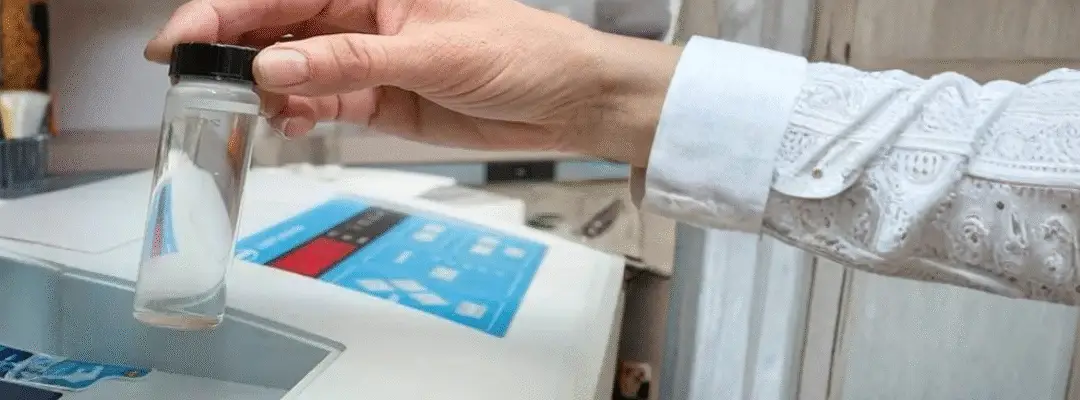
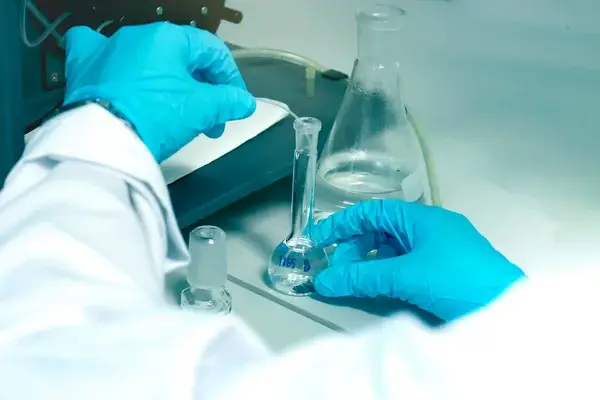
Detecting trace chemical compounds at parts-per-trillion levels is completely beyond the capability of standard building maintenance checks or over-the-counter DIY testing kits. Evaluating a building’s water supply for PFAS requires sophisticated analytical chemistry conducted within an accredited environmental laboratory.
Certified laboratories utilize highly advanced technologies, such as Liquid Chromatography-Tandem Mass Spectrometry (LC-MS/MS), to isolate and quantify specific PFAS molecules.
Furthermore, the process of sampling for PFAS requires specialized expertise. Because these chemicals are so ubiquitous in modern consumer goods, the risk of field cross-contamination during sample collection is incredibly high. Technicians cannot wear water-resistant clothing, use certain plastic collection bottles, or even use specific personal care products during the sampling window, as doing so can trigger a false positive. To see how these high-level, contamination-free laboratory diagnostics are safely scaled across intricate property layouts, facility teams can explore structured commercial testing services.
Integrating PFAS Protection into Property Operations
In a high-rise commercial tower, historic multi-family complex, or mixed-use asset, a complete water safety program should view PFAS testing as an ongoing diagnostic tool. Integrating this analysis into standard asset management routines offers critical institutional advantages:
1. Defending Tenant Health and Consumer Trust
Modern corporate tenants, luxury residents, and retail patrons possess a high awareness of environmental toxins. Offering absolute transparency regarding indoor environmental quality (IEQ)—including verifiable lab reports proving that drinking water reads well below federal PFAS limits—has become a significant differentiator in real estate asset valuation.
2. Eliminating Blind Spots in Building-Wide Filtration
Many premium properties install carbon filtration arrays or reverse osmosis systems at the point of entry or within specific tenant amenity zones. However, filtration media degrades over time. Regular PFAS testing allows building engineers to perform breakthrough analysis, verifying that existing carbon beds are actively trapping these microscopic compounds rather than letting them pass through to occupant taps. Understanding how these chemical parameters interact with mechanical filtration systems is a fundamental step in proactive facility maintenance. Operations teams can explore a breakdown of these specific environmental vectors by examining common water quality risks to better inform their physical engineering routines.
3. Comprehensive Legal and Fiduciary Protection
As legal liabilities surrounding environmental exposure expand, community boards and asset managers hold a strict fiduciary duty of care to protect residents and occupants. Documenting regular, independent laboratory verification of water safety provides an essential layer of risk mitigation, shielding ownership from severe financial and reputational liability.
Conclusion: Setting a New Standard for Urban Excellence
The inclusion of PFAS analysis into modern building water programs represents the evolution of property management from a reactive, utility-driven mindset to a proactive, science-driven discipline. Environmental hazards are changing, and our diagnostic playbooks must adapt accordingly.
By pairing traditional testing methods with high-precision chemical diagnostics, Midtown property leaders can eliminate invisible liabilities, protect public health, and ensure that the water flowing through their buildings meets the absolute highest standards of modern safety. True operational excellence requires total clarity, and total clarity begins with advanced laboratory analysis.